Showing posts with label Ryan Smith. Show all posts

27 August, 2014

There’s an urge to fuel reduction burn, but not to learn

Phil Ingamells, Victorian National Parks Association spokesman
Weekly Times Now, 278 August 2014 

FOR three years the Victorian Bushfires Royal Commission’s independent monitor Neil Comrie has strongly advised the Victorian Government to abandon one of the commission’s recommendations: the call to burn 390,000ha of public land annually for fuel reduction.

Yet Environment Minister Ryan Smith is sticking to that target and, even more puzzling, DEPI plans to increase that annual target to an extraordinary 450,000ha.

Former police chief commissioner Comrie understands the importance of fuel reduction, but he sees the target as unachievable, and that it compromises a strategic burn program.

He says it “will not necessarily reduce the bushfire risk to life and property, and may have adverse environmental outcomes”. That’s an expensive lose-lose situation.

Minister Smith says he is listening to the latest science, but is he?

Five leading fire behaviour scientists in Australia, Canada and the US have demonstrated that managing the ignition point of a fire through increased capacity for rapid attack, and by closing public access to remote areas during high fire danger days, was more effective in reducing the extent of fire than fuel management.

And other published papers, from leading Australian fire scientists and ecologists, convincingly show that fuel reduction burns are most effective when performed close to the assets they are meant to protect. This is the sort of strategic effort — small, difficult and expensive local burns — that Neil Comrie says is less likely to happen when managers are struggling to sign off on a large area target.

Many studies show that we now have very little long-unburnt bush left in Victoria, even in remote areas such as the Mallee, and that the impacts on native wildlife are serious and growing.

One of the best ways to survive a severe bushfire is to have your own well-designed bunker at your home. That crucial fact never made it to the commission’s final recommendations.

We need to develop a more comprehensive strategy for bushfire management and direct more attention to the whole range of available tools, including building a serious rapid attack capability, encouraging well-designed bunkers in existing homes, and developing a far more strategic burn program. Lives would be saved, and our great natural heritage would benefit.

Phil Ingamells is Victorian National Parks Association spokesman

28 November, 2013

'Vested interests' are harming efforts to save the Leadbeater's possum

Oliver Milman
theguardian.com, Thursday 28 November 2013

Panel created to save Victoria's faunal emblem favours the logging industry, says Wilderness Society

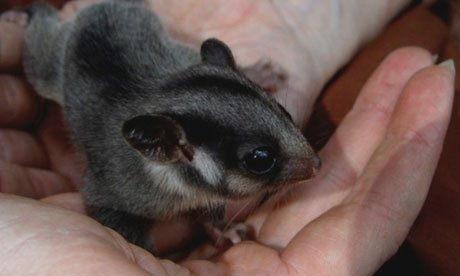
The Leadbeater's possum is Victoria's faunal emblem. Photograph: guardian.co.uk
A government-formed panel tasked with saving the Leadbeater’s possum is hopelessly conflicted and has already discarded proposals to change logging practices that are driving the animal to extinction, conservationists have claimed.

Documents seen by Guardian Australia show the Leadbeater’s Possum Advisory Group has picked a swath of conservation options including the installation of nest boxes, releasing possums outside their known habitat and even constructing artificial trees using 3D printing technology.

But the group has angered environmentalists by failing to consider winding up VicForests, the state logging agency, or shifting timber production to plantations, away from sensitive old-growth areas. There has been no suspension of logging in these areas during the group’s work.

The advisory panel was created by the Victorian government in June, with the task of devising a plan to save the Leadbeater’s possum alongside a “sustainable timber industry”. The species, which is Victoria’s faunal emblem, is perilously close to extinction, with remaining animals living in pockets of old-growth forest in the central highlands region of the state.

However, the composition of the panel has come under fire, with each of its members affiliated with either the government or the logging industry.

Robert Green, the chief executive of VicForests, is on the panel, as is Lisa Marty, the chief executive of the timber industry body VAFI. Jenny Gray, the chief executive of Zoos Victoria, Bill Jackson, chief executive of Parks Victoria, and Bram Mason, chair of the Leadbeater’s possum recovery team, make up the rest of the group.

Steve Meacher, a member of the Leadbeater’s possum recovery team, which was set up when the possum was listed as endangered, told Guardian Australia that Mason shouldn’t be its representative because he is a government employee.

“I don’t have anything against Bram at all, but we should be chaired by someone with more independence,” he said. “We need someone who can express opinions to government without fear or favour, but at the moment Bram is coming to us telling us what the advisory group is thinking, rather than the other way around. He’s not really representing us.

“The whole thing is compromised by the fact so many participants work for the government and have an interest in logging continuing. The basic premise of the group is that a way must be found to ensure the continuation of logging in Leadbeater’s habitat, but the lesson we’ve learned time and again is that the two aren’t compatible.”

The Wilderness Society has written to the government voicing its objections to the process, saying the advisory group’s terms of reference are too narrow and favour the logging industry.

“You’ve got a situation where VicForests is charged with saving a species which it is sending to extinction by logging its habitat,” Amelia Young, the Victorian campaigns manager of the Wilderness Society, told Guardian Australia. “The science so clearly shows the Leadbeater’s possum is on an extinction trajectory that Victorians are really looking for some action to save it. This group must do better.”

Young said the group needed to embrace the recommendations of the Australian National University ecologist David Lindenmayer, who has proposed a move to plantation timber, a new protected area for the Leadbeater’s possum and buffer zones between logging and known possum habitat.

“For the group to not consider alternatives, such as plantations, is a nonsense,” she said. “It’s like refusing a blood transfusion because the blood is at another hospital. Unequivocally, the clear felling of Leadbeater’s possum habitat needs to end. Building a nest box is a short-term answer that doesn’t address the problem.”

Data relied upon by the advisory group has been contested by conservationists, with the extrapolated estimate of between 4,000 and 11,000 remaining Leadbeater’s possums differing markedly from Lindenmayer’s surveyed estimate of up to 2,000.

The logging industry says the primary threat to the possum is fire, with the 2009 Black Saturday fires scorching nearly half of the species’ habitat. It’s estimated that just 1% of old-growth forest remains in the central highlands region.

The Victorian environment minister, Ryan Smith, has been contacted for comment.

14 August, 2013

Vic govt declines to comment on possum extinction

Mark Colvin 
ABC PM -  14/08/2013

MARK COLVIN: Last night we ran an interview with the leading expert on Victoria's faunal emblem the Leadbeater's possum who warned of the creature's likely extinction.


Professor David Lindenmayer of the ANU draws on more than 30 years of work in the Victorian Ash forests studying the possum.

He argued among other things that a new national park was needed to protect the Leadbeater's possum, because without areas completely free of logging, it had no chance of survival.

We said then that we'd be seeking a substantial response from the Victorian government tonight.

Today, the Victorian Environment Minister, Ryan Smith, declined our invitation to appear.

He referred us to the Agriculture Minister, Peter Walsh, who was also unavailable.

PM then approached the Premier's office, but he too declined.

Mr Walsh's office suggested we talk instead to the loggers' peak body, the Victorian Association of Forest Industries.

Its Chief Executive is Lisa Marty.

LISA MARTY: Look I, I think given the impact of the 2009 bushfires, which burnt 45 per cent of the Leadbeater possum reserve area, the survival of the Leadbeater possum is a concern for many Victorians, certainly including those in the forest and wood products industry.

MARK COLVIN: You don't accept what Professor Lindenmayer says, that it's the effect of both logging and bushfires?

LISA MARTY: Look I think there's a range of challenges facing the Leadbeater possum, but overwhelmingly the impact of the 2009 bushfires has made the situation very critical. As an industry and certainly as the Victorian Association of Forest Industries we're committed to responsible forest management and to the recovery of the Leadbeater possum alongside a sustainable local forest and wood products industry.

MARK COLVIN: And critical means urgent doesn't it? I mean what's being done in the very short term?

LISA MARTY: It is about the short term future of the Leadbeater possum but it's also about the future of the possum in the long term.

David Lindenmayer's work does show that over time there are a range of challenges facing the possum; so there are both short and longer term challenges.

MARK COLVIN: But this advisory committee, this Leadbeater's Possum Advisory Group, when is that going to produce any real results?

LISA MARTY: The group has been requested to provide recommendations back to the government before the end of the year. It's quite a short timeframe but we will be drawing on the latest science, including the work of Professor Lindenmayer, as well as the outcomes of recent work by the Arthur Rylah Institute, which was commissioned by the Victorian government, last year as well as the contributions of stakeholders.

MARK COLVIN: Well he tells me that he's been writing to the government and has had really no response, is he going to have any guarantee of being properly listened to by this group?

LISA MARTY: Certainly. It is absolutely crucial that the work of respected scientists such as Professor Lindenmayer, the scientists at the Arthur Rylah Institute, forest scientists, social scientists, provide concrete recommendations to the advisory group to draw on alongside the contributions of key stakeholders.

MARK COLVIN: What about his proposal that there should be a new national park; that there should be an area which is specifically reserved from logging because he says that's the only way the Leadbeater's possum, which is the emblem of Victoria, is going to survive.

LISA MARTY: Look it's difficult at this stage to pre-judge what might come out of the work of the advisory group. Suffice to say that Professor Lindenmayer is one of the key experts being engaged, and his work will...

MARK COLVIN: But isn't it fair to say that the Forest Industry Association and its previous iterations have always opposed any attempt to lock off more land for the protection of the possum?

LISA MARTY: Look I think in reality there has been an increase in reserves for the possum. It's very unfortunate that along with the impacts on the community of the 2009 bushfires, 45 per cent of the Leadbeater possum reserve area was effected. And unfortunately the Leadbeater possum has been shown to be incredibly fire sensitive and does not continue to exist in the areas which have been effect by fire; so that is really driving a more critical situation.

MARK COLVIN: You would have heard your predecessor, Robert Bain, of the Forest Industry Association last night on the Four Corners program in 1991 saying that he was not worried in the sense that good management would maintain a healthy population of Leadbeater's possum. And he told me at the time it would be alright because they'd be putting in nesting boxes. Now David Lindenmayer says that he did a 10 year study on that nesting boxes idea and the possums simply don't use them. So why would your optimism now be anymore well placed than his then?

LISA MARTY: Look I think that's true, that research has shown that in the Ash forests, where this population of Leadbeater's possums exist, nest boxes are not preferred. They do work very well in Yellingbo, it's difficult to look back and…

MARK COLVIN: That means that you have to have what they call "stag trees" those are the old trees that have the big old hollows in them.

LISA MARTY: That's right.

MARK COLVIN: And the pattern is, isn't it, that the foresters have tended to clear fell them and not leave enough for the possums?

LISA MARTY: Look there are a range of prescriptions in place at the moment to protect Leadbeater possum habitat. Obviously this is a challenging situation and we need to look at what needs to be done in the future, certainly we can look back and we need to learn from the past. But we need to understand based on the work of key scientists right now, what do we need to be doing in the future to ensure the recovery of the Leadbeater's possum. And we certainly believe that the sustainable local timber industry can co-exist.

MARK COLVIN: Lisa Marty, the chief executive of the Victorian Association of Forest Industries.

15 December, 2011

LETTER: Environmental policy a betrayal of Liberal legacy

Damian Magner, Montmorency
The Age, Letter, 15/12/2011

SAFEGUARDS for the protection of Victoria's natural environment have been in decline since the Baillieu government was elected and now the destruction is set to get worse (''Timber gets long-term commitment'', The Age, 14/12). It is clear the National Party is driving environmental policy in this government. Poor old Environment Minister Ryan Smith has been put in a box while the National Party runs riot. Some of the best conservation gains in Victoria were as a result of the vision and leadership of the Hamer Liberal government in the 1970s. Ted Baillieu is trashing his mentor's legacy because he is dependent on the National Party to hold government.