Showing posts with label endangered species. Show all posts

20 March, 2014

Don't give up on Australia's endangered species

David Lindenmayer
The Guardian, 20 March 2014

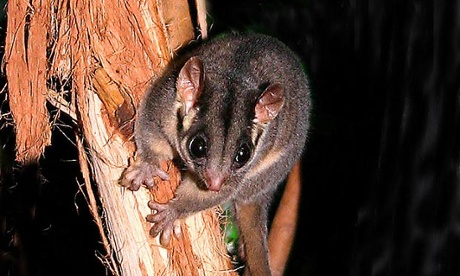
Endangered: the leadbeater's possum. Photograph: Healesville Sanctuary

Recently, there has been a lot of discussion in the scientific community about whether we should allow some species to go extinct. The argument put forward is that the number of endangered species is so great, it isn’t worth the resources to attempt to save them all. But in a wealthy country like Australia – which has some of the best ecologists, conservation biologists and conservation scientists in the world – it is critical that we do far better in managing the nation’s natural resources. A loss of biodiversity is an indicator of poor environmental management. Suggesting that we should let yet more species go extinct on this continent is too defeatist and does not inform the public about what is needed to solve the country’s biodiversity issues.

The approach to allowing species extinction has been around for some time. It’s called “ecological triage”, whereby limited resources for conservation funding are targeted at the subset of species for which management success is most likely. The approach stems from the same process used in medicine to set priorities for allocating efforts to treat patients. The ecological triage approach is thought by some to be essential because it is believed that many resources are directed to species on the brink of extinction that are doomed in the long run, and too few are targeted at declining flora and fauna that are still recoverable.

As a counter to these ideas of ecological triage, some conservation biologists believe that parallels between emergency medicine and conservation biology are inappropriate. For example, they consider that it makes extinction acceptable and allow decision-makers to get away with allocating insufficient resources to address environmental problems. More than a decade ago, scientists Cameron and Soderquist argued in Nature that nations such as Australia should reject the concept of ecological triage because it is has the knowledge, time and ability to save threatened and endangered species.

My own opinion is that rather than arguing about which species to save and which ones to let go extinct, five key things need to be done.

1. We need to make some general calculations about how much money is needed to adequately conserve Australia’s biodiversity.

2. We must develop the funding framework to support effective conservation and land management efforts. Piecemeal, short-term and underfunded attempts characterise the environmental management arena in Australia – usually with limited success. Large-scale and long-term initiatives like an environmental levy (like the Medicare levy) or a GST on food with the funds directed in land management are possible options. Levies can work and if managed appropriately (and transparently) can raise sufficient funds to solve major problems and spread the burden across all of society to generate a public good outcome.

3. We must identify the management actions and expenditure of resources that will provide the maximum benefit.

4. We need to do the proper management interventions to tackle the processes threatening biodiversity in particular ecosystems – be it limiting industrial clearfelling in the wet forests of Victoria to conserving populations of the endangered leadbeater’s possum, continuing strategic fox-baiting to reduce feral predators and maintaining populations of animals like the eastern bristlebird, or protecting woodland remnants and re-vegetating patches of woodland on farmland to help recover temperate woodland birds.

5. We must do the monitoring so that we can tell what management is working (and then keep it going), and what is not, so that it can be changed. This last step is critical as it essential to show investors – the Australian public – what was the environmental return on the investment.

Debates about letting species go extinct are important to stimulate discussion among the public, policymakers and politicians about the long-term trajectory of conservation. This nation must properly identify the expenditure of resources, management actions and monitoring that will conserve its natural heritage.

01 October, 2013

Endangered animals languish in Victorian government limbo

Graham Readfearn
ABC Environment, 1 Oct 2013

The Victorian Government is being taken to court by a tiny environment group on behalf of four endangered species. The aim is simply to make the government obey its own laws.

IT WOULD HAVE BEEN ABOUT three weeks ago when Tony Brindley last heard that distinctive crackly cockatoo call — a cue to shoot his gaze skywards.

"You've got to be alert and know the call they make," says the 72-year-old, before mimicking the throaty staccato screech of the glossy black cockatoo. "When he flies his tail fans out. As he moves through the trees you see this flash of red."

For more than 40 years Brindley has been visiting the Wallagaraugh area of East Gippsland, but as time has moved on the birds' numbers have dropped. In 1995, it was listed threatened in Victoria.

Now, he'll only spot the "glossy blacks" three or four times a year — sometimes gliding between the trees and sometimes quietly perched, pecking at a seed pod of their favoured black she-oak trees.

But since May, this characteristically shy bird has been perched beside three other threatened species in a legal case brought against the Victorian State Government by small volunteer-run conservation group Environment East Gippsland (EEG).

Lined up with the glossy black are the eastern she-oak skink, listed as threatened in 2000, long-nosed potoroo, listed in 2002 and the large brown tree frog listed the following year.

"It was an act of desperation," says Jill Redwood, coordinator at EEG. "These species have been evolving for millions of years but are being snuffed out because of reckless government. We had to do something because nobody else was."

When species are listed as threatened under the state's Flora and Fauna Guarantee Act, the legislation calls for "action statements" to be drawn up "as soon as possible" to help protect them.

The case aimed to force the government to follow its own rules and draw up action statements.

In 2009, a Victorian Auditor-General's report found that of the 653 species then listed as threatened, "less than one-half have had an action statement prepared, and only a handful of these action statements have been reviewed and updated."

A follow-up report in 2012 by lawyers at Environmental Defenders Office Victoria (EDO) found there had been little improvement in the intervening years.

Felicity Millner, principal solicitor at EDO Victoria which is administering the case for EEG, says: "We chose these four species in particular because of their importance for East Gippsland — a lot of the remaining habitat for them is in East Gippsland — and they're all affected by native logging.

"Action statements are supposed to set a plan to ensure a species is conserved. It looks at their status and what needs to be done in the future.

"It's as a result of the government failing to comply with its own laws that this case came about."

ABC Environment understands both the government and EDO Victoria have been working towards a possible settlement, avoiding a scheduled Supreme Court hearing in late October.

Rena Gaborov, 39, is a conservation manager from East Gippsland who has studied the small marsupial the long-nosed potoroo — a distant relative of the kangaroo. She admits to being a fan.

"They are so fast and cryptic. Their main defence is to hide in dense understory vegetation. You could live around these animals and never see them," she says.

"An amazing thing about potoroos is that they specialise in eating truffles. They're somewhere between 30 and 60 per cent of their diet."

She says the trees have an important symbiotic relationship with the underground fungi and the potoroos help to spread the fungi spores. She says burning, logging and development has fragmented and damaged the potoroo habitats.

"They just slowly disappear and there are all these local extinctions of populations going on and we don't know how that affects other more isolated groups. We need a lot more monitoring and research," she says.

The charming long-nosed potoroo mostly eats truffles. (Photo: Hans and Judy Beste)
The legal action is the third taken by EEG in recent years. In 2009, the group successfully took Victoria's state-owned forestry company VicForests to court over attempts to log in areas of habitat for threatened species. The court also awarded EEG more than $500,000 in legal costs.

In 2012 EEG again launched legal proceedings against VicForests over plans to log in and around supposedly protected rainforest areas. VicForests denied that any areas were ever under threat. The case was settled out of court.

"The government just seems to be shameless in the lack of respect for their own laws. Going to court is the only thing we can do," says Redwood. "It shouldn't be left up to the public to force the government to abide by it's own laws. It's just an absurd situation.

"I suppose the Government needs to change — but then this has been going on for decades. Unless we take up arms we will have to keep relying on groups like ours and the rest of the community to hold the government to account."

A statement from the Department of Environment and Primary Industries confirmed there were 689 species, communities or processes (such as pollution of waterways or removal of species) that did require action statements. Of these, the department said 60 per cent had either been "drafted, published or were due for review".

The statement said: "DEPI is working hard to increase the number of action statements and is working closely with scientists, species recovery teams, government agencies and community organisations. High priority statements have been identified."

The statement added the department was "committed to producing priority action statements" for the four species in the legal case and these would be released progressively between 31 December 2013 and 30 June 2014.

"Most importantly, DEPI is also focussed on taking action and putting in place practical, local solutions to protect these valuable species by supporting the recovery of threatened species and investing in research for effective management solutions."

The statement also said a program to control foxes had "led to an increase in sightings of the long-nosed potoroo in far East Gippsland, and progressive efforts have been made to protect the stands of the glossy black cockatoo habitat."

VicForests operating procedures for East Gippsland, the statement added, also meant trees could not be harvested within 100 metres of "any identified nesting tree" of the glossy black-cockatoo.

23 September, 2013

Failing on forests

Warwick Sprawson, Brunswick West
The Age (letter), 23/9/13

The decision to log Mount Cole State Park (''Green anger at go-ahead for state forest logging'', 21/9) shows the gulf between the state government's actions and community expectations. In 2010, a National Parks Association report, ''Better Protection for Special Places'', listed Mount Cole as the Central Victorian reserve in most need of additional protection, based on the park's high-quality vegetation and diversity of wildflowers, including species such as the vulnerable Grampians bitter-pea. Mount Cole was also home to a range of vulnerable animals rare in Victoria, such as the powerful owl and brush-tailed phascogale. The state government's continued assault on our environment does not meet modern standards of environmental stewardship.

21 September, 2013

Green anger at go-ahead for state forest logging

Tom Arup, Environment editor
The Age, September 21, 2013

The Napthine government will reopen commercial logging in the Mount Cole state forest near Ararat in the first significant step towards increased timber cutting in western Victoria.

Agriculture Minister Peter Walsh on Friday announced he was seeking expressions of interest from foresters to harvest 3000 cubic metres of sawlogs in the Mount Cole forests over three years.

The decision follows a one-year harvesting ''trial'' at Mount Cole launched in late 2012 that allowed 600 cubic metres of wood to be taken through silvicultural harvesting and the salvaging of trees felled by storms.
Mr Walsh said the new Mount Cole logging licence was small-scale, but would create ongoing jobs in harvesting, hauling and processing of timber. He said 20 of the 4000 hectares of forest in the region that was suitable for sawlogs would be harvested each year. Before last year's trial, logging had not occurred at Mount Cole since 2004.

The government has also recently completed a tender for increased logging in ironbark and sugar gum forests near Bendigo, and will issue new licences for sawlogs in the red gum forests of the Mid Murray and Horsham regions when old ones lapse.

It follows the recommendations of a government-commissioned review into logging rates in western Victoria, also released on Friday.

Green groups hit out at the decision, with Nick Roberts, a campaigner with the Victorian National Parks Association, saying the report was a wish list from local timber interests wanting access to western Victorian forests.

''The industry was paid millions to exit these forests 10 years ago,'' he said.

''Expanding logging in high-conservation-value forests is not supported by most Victorians. This announcement shows the Napthine government is not listening.''

But the timber industry welcomed the move, with Victorian Association of Forest Industries chief executive Lisa Marty saying that allowing harvesting at two-thirds of the sustainable level of Mount Cole was ''a good example of setting a balance between ecological, social and economic values''.

Much of the large-scale commercial native timber logging in Victoria takes place east of the Hume Highway in the forests of Gippsland and the Central Highlands.

Large-scale logging in western Victoria - notably in the Otways forests - was phased out by the previous state Labor government, with plantations and a handful of native firewood cutters remaining.

But since coming to power in 2010, the Coalition-led state government has flagged it wanted to see a boosted timber industry in western Victoria. An internal note from the former Department of Primary Industries, seen by Fairfax Media, says after timber harvesting was scaled down in the early 2000s, several areas in western Victoria had been left ''underutilised''.

The review identifies other areas that could be opened up to small increases in logging, including the Otways, although that would not occur until the timber industry is re-established at Mount Cole.

But Mr Walsh said: ''While the review assessed potential sawlog yields in timber production areas across western Victoria's state forests, there are no plans for new sawlog allocations aside from those mentioned above.

''The Victorian Coalition government will not consider any expansion outside of existing timber-production areas.''

03 December, 2012

Forests and wildlife – Not negotiable


Media release, Monday 3 December 2012

Gillard, protect the environment, not the Business Council

Emergency demonstrations in logging-affected communities around the country are taking place today, as conservationists call on the Prime Minister not to abandon environment and wildlife protection by finalising a closed-door deal with big business at the COAG meeting this week.

Community groups are holding banners in clearfells and forests devastated by logging in WA, NSW, Tasmania and Victoria, to show Gillard what environmental management by state governments looks like.

From her Observer Tree perch 60 metres up in the canopy of Tasmania's beleaguered old growth forests, where she has spent nearly twelve months during a time of intense negotiations and ongoing forest destruction, Tasmanian activist Miranda Gibson has a personal message to Gillard: 'Don't abandon environmental protection'

COAG and the Business Council of Australia (BCA) both meet in Canberra this week and plan to weaken federal environment protection laws and hand powers to assess and approve development in environmentally significant areas to state governments. This leaves Australia without any federal oversight of damaging activity in these iconic areas.

“Anyone who thinks that the Commonwealth should be able to transfer its responsibility for environmental protection to state governments and supervise at a distance need only have a look at the wholesale failure of the Regional Forests Agreements for an example of how disastrous this approach has been,” said 'Nature: Not Negotiable' campaign spokesperson, Lauren Caulfield.

'Putting the states in charge of forest management has led to the devastation of forests around the country for export woodchips, the ongoing decline of threatened species, and a legacy of community conflict,' said Jenny Weber, Huon Valley Environment Centre.

'In Victoria we are facing an extinction crisis – including that of our own wildlife emblem, the endangered Leadbeater's (fairy) Possum, as Premier Baillieu continues to allow the logging of its last forest strongholds,' said Ms Caulfield.

The proposed devolution of responsibilities under national environmental laws to state governments is similar to what we already have in place under Regional Forests Agreements, where the Commonwealth has entrusted state governments with protecting biodiversity.

'These moves are a rampant attack on environment to protection and will take us 40 years backwards, leaving our iconic wildlife and wild places at the mercy of state governments with an appalling track record on environmental protection,' said Miranda Gibson, in the Observer Tree.

“The Prime Minister’s responsibility is to Australians as a whole, not to the Business Council. She
should take this issue off the COAG agenda for Friday and off the government’s agenda for good,” said Jess Beckerling, WA Forest Alliance.

Actions continue today and through the week. Images next page. High resolution images available.

For more information please call:

Lauren Caulfield 0408 748 939
Miranda Gibson (in the Observer Tree) 0414 535 162

24 February, 2012

Milne: Forestry Tasmania’s overcutting exposed. Forestry Tasmania board must go

Green Pages (Australian Edition), 24 February 2012

Forestry Tasmania’s over cutting of Tasmania’s native forests has been exposed in the leaks around the independent analysis of wood supply contracts as part of the Intergovernmental Agreement, Australian Greens Deputy Leader Christine Milne said today.

“What has become clear is that Forestry Tasmania has overcut and over allocated the forest to such an extent that even with the retirement of two thirds of its contracted volume via Gunns, Forestry Tasmania cannot meet the remaining one third of its obligations.

“With an annualised shortfall of 39,000 cubic metres of veneer logs, what would have happened if Gunns and TA Ann were both still in the market?

“Forestry Tasmania would have been hung out to dry and one or other or both of the companies would have sued for breach of contract.

“Forestry Tasmania must be disbanded beginning with the Board which has overseen reckless destruction of forests, overcutting, over allocation in contracts and financial failure with the $18 million losses over the past two financial years.

“It is time for the Board to explain why it permitted the over allocation of the forests and then the overcutting whilst pretending that the forests are sustainably managed.

“Forestry Tasmania and Ta Ann should apologise to the forest activists who have been telling the truth about the forest practices that underpin their contracts.

“Far from being sustainably managed, Forest Practice Authority chief, Graham Wilkinson has made it clear that Forestry Tasmania’s current practices do not meet scientifically based requirements for the protection of threatened species.

“Forestry Tasmania has argued throughout the process that, provided it can continue to ignore scientifically based requirements for the protection of endangered species, it could still meet its contracts until 2030 provided no more areas were protected.

“Now we know that is a lie. It cannot. Even with no reserves, and unsustainable practices, Forestry Tasmania cannot fulfil its contracts from native forests.

“Forestry Tasmania must go.”

18 August, 2011

Failing the forest


Sarah Day, Brunswick
The Age (letter), 18 August 2011

THERE'S less than 8 per cent of old-growth forest cover left in Victoria. Conservationists have identified endangered species in this area that is earmarked for logging. The Baillieu government's response? Review the Flora and Fauna Guarantee Act so that the existence of animals deemed threatened or endangered is less likely to derail logging proposals.

Just add it to the list: reassess green wedges for possible development, de-fund Environment Victoria to the tune of $1 million, let the cows back into our fragile Alpine National Park. With ''leadership'' like this, there's little hope for Victoria's environment with Ted in charge.

04 July, 2010

LETTER: The bones will tell the story

Sarah Rees, executive director, My Environment, Healesville
Letter, The Age, 3 July 2010

VICFOREST chief executive David Pollard claims ''all trees harvested in Toolangi had dated from 1939 bushfire regrowth and no possums had been affected'' - ''Green groups in logging case bid'' (The Age, 1/7).

We may have a different picture. Beneath a large, smashed tree in the logging zone lies the burnt remains of what looks to be a small marsupial. We exhumed some skeletal remains, bone-white against the charred soil, from the coupe burn. The skeleton is at a veterinary clinic, awaiting analysis. It may be an eastern pygmy possum, a bobuck possum, a ringtail possum or even a Leadbeater's possum.

This forest had many possums and as many gliders again - the Department of Sustainability and Environment's maps shows this. These bones may tell the story of the logging disaster that took place in this possum's home. But let us leave it for the judge to decide.