29 May, 2014

VicForests should be chopped

Peter Campbell
The Age, Letter (not published yet), 29 May 2014

The Victorian Government should cease subsidising VicForests, its loss-making logging business . Most of the logged forest logged ends up as low value woodchips, the market for which has just collapsed with the Japanese-owned South East Fibre Exports woodchip mill no longer accepting Victorian woodchips (The Age, 29/5/14).

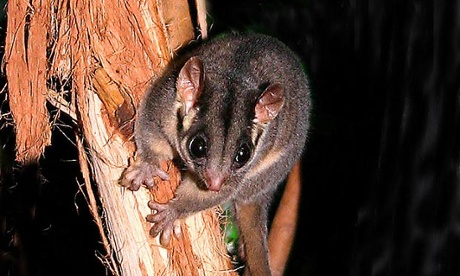
However, VicForests continues to log our remaining wonderful native forests, including Toolangi State Forest that wasn't burnt during the Black Saturday bushfires. Professor David Lindenmeyer has repeatedly warned that Leadbeaters possum, Victoria's faunal emblem, is destined for extinction if VicForests continues to log our Central Highlands forests.

Instead, the Victorian Government should support the community-led proposal to create the Great Forest National Park to protect our scarce remaining native forests, rather than continue to destroy them.

It makes much more sense to create long-terms jobs in managing and protecting our forests and associated tourism. These forests harbour the tallest flowering trees in the world. In addition, the forests provide valuable water.

There is more than enough plantation timber resource available than can immediately provide a substitute timber resource.

We are just lacking the political will and courage to stop the logging and create the urgently needed new national park that will benefit all Victorians.

Axe VicForests or chop off the public money

Josh Gordon
The Age, May 29, 2014 

The age of entitlement is alive and well in Victoria. At least when it comes to the logging of native forests, a proposition that has become so financially fraught the government is considering getting into the business of firewood collection and chipboard production just to prop it up.

A couple of weeks ago South East Fibre Exports – the Japanese-owned company that owns a large woodchip mill at Eden – decided to dump a contract taking waste timber from VicForests’ East Gippsland logging operations.

It was seen as a body blow for the industry. As it is, harvesting sawlogs from native forests is barely viable, with international markets increasingly demanding cheaper and higher-quality plantation timber, and wood also increasingly sourced from low-cost countries, such as Vietnam. Australia's high dollar hasn't helped.

Even before the decision by South East Fibre Exports, the local sawlog industry was in strife. A December 2013 report by Victoria’s auditor-general found that last financial year at least 250,000 cubic metres of residual wood – 16 per cent of the total harvest – was left on the forest floor and burnt because no one wanted to buy it.

"It is not sold primarily because there is currently no market for it," the auditor said.
What a waste. There may no longer be a market for Victoria's "residual" native timber, but selling this unwanted byproduct is still seen as vital to make sawlogging viable.

Under the current arrangement with South East Fibre Exports – which will end next year – VicForests supplies about 200,000 cubic metres of wood to the Eden mill, equivalent to about one-sixth of the total 1.2 million cubic metres produced by VicForests in 2012-13.

The situation is so dire that VicForests is now considering the possibility of selling the residual wood from its forestry operations as firewood, producing chipboard, or using old-growth waste wood for power generation.

"There is the opportunity for local bio-energy production, but also simple markets, particularly given the increase in energy costs, [like] domestic firewood for home use," VicForests corporate affair's director Nathan Trushell told Gippsland ABC radio.

You can only wonder how a private sector firewood business might feel about the prospect of a heavily subsidised state-owned behemoth encroaching on its businesses.

Indeed, as far as socialist-style, publicly owned businesses go, VicForests is in a league of its own.
Not only has VicForests been gifted a hugely valuable public asset free of charge, it has been given monopoly rights to chop this asset down, all the while being spared massive direct and indirect costs associated with logging operations.

It is enough to make Fidel Castro blush.

These indirect costs include the $20 million annual cost of maintaining forestry roads, the opportunity cost of the water lost from our catchments, plus intangible costs such as lost biodiversity and reduced public amenity.

What does the public get in return for this bold experiment in socialism? According to an assessment of VicForests’ finances by the Australian Conservation Foundation, since 2005, VicForests has accrued operating cash flow losses of $11.9 million on its core forestry activities. Over the same period, it has notched up investment losses worth $10.2 million.

That’s a combined loss of $22.1 million from forestry activities – equivalent to about $1.50 for every square metre of timber harvested so far. As the report notes, VicForests' financial position has to a significant extent been propped up by reliance on cheap debt from the Treasury Corporation of Victoria.

In the nine annual reports since it was established, VicForests has announced just three dividend payments to taxpayers: $3 million in 2006 and $2 million in 2007 and a further $250,000 payment this financial year after a positive profit in 2012-13.

The big argument in favour of protecting the local industry is employment. As the auditor pointed out late last year, the timber industry employs more than 21,000 people, while VicForests claims native forest timber harvesting in eastern Victoria has generated about $1 billion in direct economic benefits since 2004.

Agriculture Minister Peter Walsh insists the market is "fundamentally sound" for high-quality sawlogs, claiming the challenge is to find alternative options for the residual and low-grade timber.

But at what cost? There are very real questions that need to be tackled about whether we can continue to push public resources into an industry that would surely struggle to survive on its own – particularly in an age where the public is told the age of handouts is over.

If the objective is to protect jobs, surely there are more sensible ways to do this. If the government is determined to protect Victoria’s timber industry, investing in economically viable plantation forestry might be a good start.

Already there are rumblings within Coalition ranks about the future viability of VicForests, with the issue seen as a potential pressure point between the the Liberal and National parties.

Given the predicament facing VicForests, it is not hard to see why. The debate is no longer one of ideology, it is one of basic economics.

15 May, 2014

Government stands firm on bid to reduce Tasmanian forest World Heritage listing

Felicity Ogilvie
ABC News 15 May 2014 

The Federal Government is ignoring a Senate inquiry's advice on a World Heritage-listed forest in Tasmania after the inquiry condemned plans to delist the forest.

PHOTO: The World Heritage committee will hand down its draft decision on the Tasmanian forest this week. (Rob Blakers: Supplied)
The extension of Tasmania's World Heritage area is the centrepiece of the so-called forest peace deal.

But the Coalition opposes the deal and say they want the World Heritage committee to reduce the Tasmanian extension by 74,000 hectares.

Greens leader Christine Milne is on the Senate Committee that has told the Government to stop trying to delist the forest.

"If a country like Australia decides that, as a result of a political whim, it can destroy its World Heritage area to facilitate logging, that will send a very clear message to other countries that they can adjust their boundaries for uranium mines or any other kind of mining, logging, tourism, development or whatever they like," she said.

"It would be a real blow to World Heritage globally."

Tasmanian Liberal Senator Richard Colbeck says the Government will push on with its request.

The area contains some plantations and areas that have been previously logged.

Senator Colbeck says it should never have been World Heritage.

"I think the Tasmanian community said at the federal election last September, and again at the state election in March, that they want to have a forest industry, they want to sensibly use our resources in Tasmania, but they also ... value and want to maintain the wilderness World Heritage values of the outstanding area that is the original estate," he said.

"So I think there's an opportunity to have win-win-win all round."

The World Heritage committee will hand down its draft decision this week.

Spokesman for the Tasmanian Special Timbers Alliance Andrew Denman is hoping the area's World Heritage status will be revoked.

Mr Denman builds boats out of specialty wood and he says the forest agreement and subsequent World Heritage listing is putting pressure on timber supplies.

"The TFA (Tasmanian Forest Agreement) has had a terrible impact on especially the timber sector," he said.

"We've seen a massive reduction in supply of timber, in some cases over 90 per cent for some species.

"We've also seen a doubling and sometimes a tripling of the resource price as well, all because of a political agreement to restrict access to a sustainable resource.

"So if the World Heritage committee decides not to approve the Federal Government's request to remove 74,000 hectares, obviously that 15,600 hectares of specialty timber area that could possibly be accessed will not be available and that will have an impact on industry."

Vica Bayley from the Wilderness Society is one of the environmentalists who negotiated the forest agreement and he wants to keep the World Heritage extension intact.

"The industry has restructured and, similarly, the specialty timber sector needs to readjust and accept that fact," he said.

"There are plenty of specialty timber operators and specialty timber workers that are saying, keep this World Heritage list, keep the Tasmanian Forest Agreement, and let's work with what we have."

Environmentalists have already been back into the forests protesting against the World Heritage delisting.

Mr Bayley says delisting of the World Heritage forest will spark more protests.

"If these World Heritage listed forests are indeed delisted and they are indeed logged, clearly people will continue to stand up for their protection," he said.

"Not only here in Tasmania, but across Australia and around the world. And, that's not only people that care about the forests; that's people that care about markets and where they get their wood from."

Environmentalists will travel to Doha next month to lobby the World Heritage committee when it makes its final decision on Tasmania's forests.

13 May, 2014

Chip mill to end Gippsland timber contract

Blake Foden 
Bombala Times, May 13, 2014

The owner of the Eden woodchip mill has announced it will not be renewing its contract to purchase timber from state forests in East Gippsland, when the current agreement expires at the end of 2014.

South East Fibre Exports general manager Peter Mitchell says international market pressures are the major reason behind the decision, and that company shareholders are yet to give SEFE any final direction on its next move.

Mr Mitchell said that while the announcement is a “serious development”, it does not signal an imminent closure for the chip mill.

“International market pressures have made it difficult for us to compete by selling VicForests’ resource on the basis of price and quality,” Mr Mitchell said.

“Obviously Vietnam is exporting a lot of wood chips now and has taken over from Australia as the world’s largest exporter.

“But I can reassure people that as far as Eden goes, we won’t be closing tomorrow.

“This is a serious development, but it isn’t an imminent ‘shut-up shop’ and there have been no decisions made in terms of the people who are working here.”

In the wake of the announcement, Chipstop campaigner Harriet Swift has challenged SEFE and parent company Nippon Paper to “come clean about their future plans”.

She said the Eden woodchip mill “should close now” and cease logging operations for the good of forests and wildlife.

“Closing the chipmill now would avoid so much suffering, save valuable carbon sinks and allow the forests and the community to start the healing process after 40 years of woodchipping,” Ms Swift said.

“Almost half of SEFE’s hardwood inputs come from Victoria and it looks highly improbable that the mill could survive without the Victorian logs and sawmill chips.”

The Australian Forests and Climate Alliance (AFCA) also welcomed SEFE’s announcement, labelling it a “body blow” to the logging industry.

AFCA spokesperson Jill Redwood says it is time to follow the lead of whaling and “retire the industry to history”, and warned the logging industry against turning its focus to biomass burning.

“This is a key turning point in the history of south-east Australia’s forests,” Ms Redwood said.

“Forests as now seen as essential climate moderators and Governments should take this opportunity to re-value them as carbon stores, water production areas and as essential habitat for so much of our rare wildlife.

“The burning of forests has recently been approved by the NSW government as renewable energy, and if the forests of south-east Australia are to now be clearfelled and incinerated for electricity, it would be an act of environmental wrecking that is unequalled.”

But VicForests CEO Robert Green says there are no plans to cease logging operations, saying SEFE’s announcement has ended ongoing uncertainty and now allows the state-owned business to move towards identifying new opportunities.

Mr Green said there is still strong demand for timber produced in East Gippsland, and he is confident that the industry will continue in the region, with or without export woodchips.

“SEFE’s decision to cease taking timber from Victoria will affect the market for residual timber produced from our harvesting operations,” he said.

“SEFE has been an important part of the Victorian timber industry for decades and we understand this is a commercial decision which has been made due to a range of external factors.

“Importantly, there will continue to be a timber industry in East Gippsland, and the region will continue to benefit from the contribution made by the industry.

“There are businesses that are ready to invest in the region, and we will be working closely with industry, Government and local communities over the coming months to ensure we adjust to this change.”

But Victorian Greens leader Greg Barber disagrees, saying SEFE’s exit from East Gippsland is “the beginning of the end” for native forest logging.

Mr Barber says VicForests are “in denial”, and urged the Government to immediately put a plan in place to end native forest logging.

"VicForests is a loss-making public owned company and now it is absolutely finished,” Mr Barber said.

“They can't sugarcoat it; no one wants to buy their product and they can't make any money off it.

“Their media release shows they are in complete denial about it.

"The native forest loggers have been comprehensively beaten in the marketplace by plantation tree growers.

“Instead of throwing more taxpayer subsidies at it, the government should accept the inevitable and come up with a plan for an orderly, fair and rapid exit from native forest logging.

“It's what the vast majority of the public wants."

Loss of contract a blow for East Gippsland logging industry

Tom Arup
The Age,  May 13, 2014

The future of native forests logging in East Gippsland is under a cloud after the main woodchip customer in the region announced it would not renew its contract with Victoria's state-owned timber company.

South East Fibre Exports, which owns a large woodchip mill at Eden in south-east NSW, has told VicForests it will not accept East Gippsland residual timber - the waste from native forest logging not turned into sawlogs - after this year.

VicForests chief executive Robert Green said the company faced a challenge to run a forestry industry in the state's east that continued to support jobs if it no longer exported woodchips.
The decision puts further pressure on VicForests which is seen by some as having underperformed financially since its inception in 2003. Last year VicForests registered an $802,000 profit; the year before it registered a $96,000 loss. The lacklustre performance has prompted questions about whether the loss of native forests through logging is justified for little profit.

VicForests spokesman David Walsh said it supplied about 200,000 cubic metres of wood to the Eden mill in 2012-13 - about a sixth of the total 1.2 million cubic metres of wood produced by VicForests for the year.
But Mr Green said there would continue to be a native logging industry in East Gippsland - one of the two major logging areas in the state.

"The announcement offers the certainty necessary for us to get on with the job of looking to the future and identifying new opportunities for the industry," he said.

The loss of the contract could also put pressure of the region's sawlog industry, given the sale of waste timber for woodchips contributes to making the industry viable. Mr Green said VicForests would continue to meet its commitments to sell higher-value sawlogs.

Victorian Greens leader Greg Barber said: "Japanese woodchip companies [that own the Eden mill] have more environmental consciousness than the Liberal Party. Plantation wood is greener, makes better paper and there's millions of tonnes of it available.

"VicForests is a loss-making public-owned company and now it is absolutely finished. They can't sugarcoat it. No one wants to buy their product and they can't make any money off it."

The decision to end the VicForests contract at Eden had been expected for some time among forestry circles given the struggling financial performance of South East Fibre Exports in recent years.

Agriculture Minister Peter Walsh said the government, along with industry and parts of the East Gippsland community, had last year begun drawing up a plan to explore other markets for logs used for woodchips.
"The Victorian Coalition government recognises that forestry makes a valuable contribution to regional jobs and small communities and we will continue working with local communities to support viable, sustainable and responsibly managed local industries," he said.

Speaking on ABC Radio in Gippsland, South East Fibre Exports general manager Peter Mitchell said the decision was a result of lower international demand, increased production in countries such as Vietnam, and more wood flowing from failed managed investment scheme plantations.

Calls to stop East Gippsland logging as VicForests loses one of its biggest customer

Annika smethurst
Herald sun, may 13, 2014


THE future of Victoria’s taxpayer-owned logging company is in serious doubt after one of its biggest customers announced it would no longer buy timber from the state’s forests in East Gippsland.

South East Fibre Exports, a wholly owned subsidiary of Japanese paper giant Nippon Paper, said it would not enter a new agreement with VicForests when its present contract expired.

The contract was believed to be worth about $12 million annually with SEFE taking about half of its supply from VicForests.

Industry sources say the ­decision could spell an end for native forest clearing in East Gippsland and put further pressure on the state-owned logging company, which has continued to receive government subsidies despite failing to pay a dividend for more than five years.

Farmers continue to put pressure on the State Government to stop logging in the Yarra Valley catchments due to reduced water supplies.

VicForests’ chief Robert Green said despite SEFE’s decision affecting the market for residual timber produced from harvesting operations, the industry in East Gippsland would continue.

“The challenge in front of us now is to build a different ­future for the timber industry in East Gippsland, which continues to provide jobs and economic benefits to the region but may not include export woodchips,” he said.

Victorian Greens leader Greg Barber said the State Government should stop logging native forests instead of subsidising it.

“VicForests is a loss-making public-owned company and now it is absolutely finished,” Mr Barber said.

“No one wants to buy their product and they can’t make any money off it.”

Environment East Gippsland co-ordinator Jill Redwood said woodchipping had been an economic drain.

“The Government should now manage our public forests for public good not for private profit,” Ms Redwood said.

20 March, 2014

Don't give up on Australia's endangered species

David Lindenmayer
The Guardian, 20 March 2014

Endangered: the leadbeater's possum. Photograph: Healesville Sanctuary

Recently, there has been a lot of discussion in the scientific community about whether we should allow some species to go extinct. The argument put forward is that the number of endangered species is so great, it isn’t worth the resources to attempt to save them all. But in a wealthy country like Australia – which has some of the best ecologists, conservation biologists and conservation scientists in the world – it is critical that we do far better in managing the nation’s natural resources. A loss of biodiversity is an indicator of poor environmental management. Suggesting that we should let yet more species go extinct on this continent is too defeatist and does not inform the public about what is needed to solve the country’s biodiversity issues.

The approach to allowing species extinction has been around for some time. It’s called “ecological triage”, whereby limited resources for conservation funding are targeted at the subset of species for which management success is most likely. The approach stems from the same process used in medicine to set priorities for allocating efforts to treat patients. The ecological triage approach is thought by some to be essential because it is believed that many resources are directed to species on the brink of extinction that are doomed in the long run, and too few are targeted at declining flora and fauna that are still recoverable.

As a counter to these ideas of ecological triage, some conservation biologists believe that parallels between emergency medicine and conservation biology are inappropriate. For example, they consider that it makes extinction acceptable and allow decision-makers to get away with allocating insufficient resources to address environmental problems. More than a decade ago, scientists Cameron and Soderquist argued in Nature that nations such as Australia should reject the concept of ecological triage because it is has the knowledge, time and ability to save threatened and endangered species.

My own opinion is that rather than arguing about which species to save and which ones to let go extinct, five key things need to be done.

1. We need to make some general calculations about how much money is needed to adequately conserve Australia’s biodiversity.

2. We must develop the funding framework to support effective conservation and land management efforts. Piecemeal, short-term and underfunded attempts characterise the environmental management arena in Australia – usually with limited success. Large-scale and long-term initiatives like an environmental levy (like the Medicare levy) or a GST on food with the funds directed in land management are possible options. Levies can work and if managed appropriately (and transparently) can raise sufficient funds to solve major problems and spread the burden across all of society to generate a public good outcome.

3. We must identify the management actions and expenditure of resources that will provide the maximum benefit.

4. We need to do the proper management interventions to tackle the processes threatening biodiversity in particular ecosystems – be it limiting industrial clearfelling in the wet forests of Victoria to conserving populations of the endangered leadbeater’s possum, continuing strategic fox-baiting to reduce feral predators and maintaining populations of animals like the eastern bristlebird, or protecting woodland remnants and re-vegetating patches of woodland on farmland to help recover temperate woodland birds.

5. We must do the monitoring so that we can tell what management is working (and then keep it going), and what is not, so that it can be changed. This last step is critical as it essential to show investors – the Australian public – what was the environmental return on the investment.

Debates about letting species go extinct are important to stimulate discussion among the public, policymakers and politicians about the long-term trajectory of conservation. This nation must properly identify the expenditure of resources, management actions and monitoring that will conserve its natural heritage.

17 March, 2014

PM Tony Abbott hopes for 'renaissance of forestry' following Liberal election victory in Tasmania

ABC News (Australian Broadcasting Corporation), 17 March 2014

Prime Minister Tony Abbott has reaffirmed his commitment to seek to remove 74,000 hectares of Tasmanian forest from the World Heritage List as part of a "renaissance of forestry" in the state.

The newly-elected Liberal Government in Tasmania, led by Premier-elect Will Hodgman, has promised to rip up the state's Forestry Agreement as well as re-open listed forests to logging.

Under the Tasmanian peace deal, 170,000 hectares of forest was added to the World Heritage area.

Mr Abbott says the Federal Government is committed to growing the forestry industry in the state.

"We want to see a renaissance of forestry in Tasmania," he said.

"Will Hodgman wants to see a renaissance of forestry in Tasmania and we'll work very constructively with the new state government to try to make that happen."

The Prime Minister declared earlier this month that too many of Australia's forests are "locked up".

He has vowed to set up a new advisory council to support the timber industry.

"We have quite enough national parks. We have quite enough locked up forests already. In fact, in an important respect, we have too much locked up forest," Mr Abbott told a timber industry dinner in Canberra earlier this month.

The Federal Government argues part of the land locked up in Tasmania's World Heritage area has already been partially logged or degraded and it should be opened up to the forestry industry.

Liberals post best-ever Tas results

Tasmania's Liberals posted their best-ever election result on Saturday night, claiming at least 14 of the 25 seats on offer on the back of a 12 per cent swing.

It ends Mr Hodgman's reign as the country's longest-serving opposition leader.

Opposition Leader Bill Shorten believes state Labor's power-sharing deal with the Greens cost the party at the ballot box.

After 16 years in power Labor suffered its worst result in six decades, winning 27 per cent of the vote and just six seats.

Premier Lara Giddings dumped the Greens from Cabinet shortly before announcing the election date.

Mr Shorten says the years in partnership were not good for the Labor brand.

"In Tasmania the Labor government had been in for 16 years that's a very long time and there's no doubt that Labor having an agreement [with the Greens] was marked down by Tasmanian voters," he said.

Meanwhile, the state's electoral commission has revealed 163 postal votes were destroyed after they were irreparably damaged by a letter-opening machine.

More than 2,300 ballot papers for the Hobart-based seat of Denison were damaged during preparation for the count on Saturday evening.

The Tasmanian Electoral Commission (TEC) said 2,175 ballot papers were repaired but 163 were damaged so badly they had to be counted as informal.

The incident has been blamed on the machine not being used properly and poor quality control.

State Electoral Commissioner Julian Type said it was not likely to impact the result.

15 March, 2014

Goodies and baddies lost in Tasmanian logjam, PM Tony Abbott will find

Richard Denniss
The Canberra Times, March 15, 2014

Fairytales of the forest could have an unhappy ending for Tasmania's jobless, as the Prime Minister will soon learn.

According to Tony Abbott, loggers are "the ultimate conservationists". Seriously. Photo: Steven Siewert

Tony Abbott recently described the people who take the chainsaws to Tasmania's native forests as ''the ultimate conservationists''.

Seriously. In his speech to the 2014 Forestworks Dinner, the Prime Minister claimed that because the loggers' future income depends on the availability of trees, they - and not the derided greenies - are the true custodians of our wilderness.

By that logic, the men who fire explosive-tipped harpoons into whales in the Southern Ocean would fit the Abbott definition of ''real conservationists''. Indeed, any self-respecting rhino poacher in Africa must surely see themselves as a far-sighted conservationist.

But the illogic of the Prime Minister's speech didn't stop there. Having defined the native forest loggers as the real conservationists, Mr Abbott went on to explain that his government's determination to remove 74,000 hectares of Tasmanian forest from the World Heritage Listing was based on the fact the areas were no longer ''pristine'' because, wait for it, some of them have been previously logged.

It seems that whoever wrote the first part of the speech didn't bother to talk to whoever wrote the second part, and in turn that the Prime Minister didn't read it before he gave it. Surely a Rhodes Scholar would have picked up a howler like that?

Or perhaps not. Maybe in the modern political world the debate moves so fast that facts and consistency are not as important as headlines and campaign bunting.

But even if the modern political speech is nothing more than a sound-grab looking for a photo opportunity, Mr Abbott's recent effort deserves closer scrutiny. It may well be the silliest speech given by a prime minister in recent years, but it certainly tells us a lot about his world view and the kind of decisions he is likely to make.

As with his approach to foreign policy, this speech assures us the Prime Minister sees economic debates in terms of ''goodies'' and ''baddies'' as well.

When it comes to Tasmania's forests, the ''goodies''' in this speech were obviously the ''ultimate conservationists'' - also known as the loggers. And the ''baddies'' in the story were the environmentalists who want to ''lock up the forests''.

The baddies, we are told, want to ''ban men and women from enjoying'' the environment, while of the goodies, Mr Abbott says, ''you intelligently make the most of the good things that God has given us''. By that he presumably means knocking down trees with bulldozers and dropping napalm from helicopters on what's left behind.

Having introduced the heroes and villains of his story, the Prime Minister's speech turns to the ''great quest''. Along with our heroes the loggers, Mr Abbott simply wants to create jobs and prosperity for the people of Tasmania. But to succeed in this mission, he must first vanquish the villains who have been holding Tasmania's jobs captive in their World Heritage-listed forests. ''We want the timber industry to be a vital part of Australia's economic future,'' he told the loggers.

But this is where the fairytale and economic reality begin to diverge. While there is no doubt Mr Abbott and the loggers want the logging industry to grow, the problem is the overseas customers don't. The world is buying less timber as more high-rise housing is built from concrete and steel, and when the world does buy timber it prefers softwood such as pine rather than the hardwoods found in Tasmania's magnificent forests, and when the world's consumers do want hardwood they prefer it to come from plantations rather than native forests.

The car industry is leaving Australia because the world doesn't want to buy the kind of cars we like to make and because overseas consumers can get the cars they do like from cheaper places than Australia.

While Mr Abbott has said no government ever subsidised their way to prosperity, and Treasurer Joe Hockey has said he wants to end the age of entitlement, the Coalition government seems determined to prop up the Tasmanian native forest loggers while waving a cheerful farewell to the car industry.

Over the past 25 years, the loggers have received more than $750 million to ease the pain associated with the fact the world doesn't want to buy their product any more.

When digital cameras replaced film cameras, the photo development labs didn't get a cent. But despite the fact the loggers' falling fortunes have been softened by an enormous mattress made of taxpayer cash, the Coalition is now painting the loggers as the victims.

While the brave loggers battling against the evil greenies may well make for the kind of simple story political strategists love these days, such stories do nothing to help the 19,000 unemployed people in Tasmania. Given that native forest logging employs only about 1 per cent of Tasmanians, it should come as no surprise the vast majority of Tasmania's jobless have never, and will never, work in the native forest logging industry.

While in the vacuum of modern political debate being ''anti-environmentalist'' means you must be ''pro-jobs'', the reality of the Tasmanian state economy is that 99 per cent of the population are not employed in native forest logging. Even if the Prime Minister's strategically selected sound bites combined with another truckload of taxpayer cash managed to double the size of the native forest logging industry, it would still be a tiny employer.

Indeed, even at twice its current size, native forest logging would still be dwarfed by the tourism industry, and Tasmania's unemployment rate would still be the highest in the country. Tasmania used to be the hub of whaling on the east coast of Australia. Men with saws once cut enormous trees and sold Australia the wood we once wanted. But, as with whale oil, the Australian public doesn't want to buy native forest hardwood any more. If they want hardwood, it's cheaper and better for the environment to get it from plantations. And when the world's paper mills want woodchips, they prefer the cheaper plantation product too.

There is nothing to stop the Prime Minister telling himself, or the public, fairytales about goodies and baddies and the quest to find jobs in magical forests. But there is no chance such stories will solve Tasmania's problems. Mr Abbott promised to create a million new jobs before the last election, and so far he is lagging badly. Speeches such as last week's might gee up the troops and shift the blame, but they do nothing to solve the underlying problems.

Dr Richard Denniss is executive director of the Australia Institute, a Canberra-based think tank, www.tai.org.au

14 March, 2014

Last-minute plea to keep Tasmania’s forest peace deal intact as Liberals head to likely election win

MATT SMITH, MERCURY
Perth Now,  MARCH 14, 2014

ENVIRONMENTAL groups and timber workers have joined forces in launching a last-minute plea for the Liberals to change their mind on ripping up the Tasmanian Forest Agreement.

Signatories to the peace deal said yesterday the Liberals would be taking the state back to the bad old days of the forest wars that tarnished the state for decades.

But the Liberal Party yesterday remained unmoved and reaffirmed its belief it would have a mandate to rip up the agreement if it sweeps into power tomorrow.

MANDATE ON FORESTS

The calls come as a Newspoll shows the Liberals are headed into the election in considerably better shape than 2010.

In the week before the 2010 election, which resulted in Labor and the Liberals securing 10 setats each and the Greens five, the polling results were tigher — the Liberals holding 39 per cent compared with Labor (36.9) and the Greens (21.6).

WHAT THE POLLS SHOWED

The Newspoll, undertaken this week and published in The Australian today, shows the popularity of the Liberals at 53 per cent compared with Labor (23 per cent) and the Greens (16 per cent).

Opposition leader Will Hodgman said he would not be bullied on the forestry issue.

“We do not support the forest deal, it failed on so many fronts,” Mr Hodgman said.

“I am in no doubt we can continue to sell our world-class products including those out of our forests.

“I am happy to talk to anyone but will not be held to ransom by Green groups who want to close the industry down.’’

CFMEU national president Forestry & Furnishing Products Division Jane Calvert joined forces with the environmental groups yesterday calling on the Liberals to rethink their vow.

CFMEU spokesman Jane Calvert wants the Liberals to rethink their pledge to rip up the forest peace deal.

“When the timber workers’ union sat down to break bread with our traditional enemies — the conservationists — back in 2010, we did so for good reason,” Ms Calvert told the Mercury yesterday.

“The agreement and its legislation are far from perfect.

“But in the four years since talks began, no political party, political leader or critic of the agreement has put forward a credible alternative to address the impending change in resource, shifting market preference and need for investment.

“The agreement and legislation have resulted in an unprecedented cessation of conflict in the forest, and growing confidence in markets.”

Wilderness Society spokesman Vica Bayley and Environment Tasmania spokesman Phil Pullinger appeared to be choosing their words carefully yesterday, stating they were still committed to the agreement.

Wilderness Society spokesman Vica Bayley has been chosing his words carefully in relation
But the pair also made it clear they could no longer offer their support, and endorsement, to overseas and domestic markets if reserves under the agreement were scrapped by the Tasmanian Liberals.

“It does not take too much creativity from any of us to think about what will happen if they start logging World Heritage forests,” Mr Bayley said.

matthew.smith@news.com.au

Liberals warned over TFA stance

Rosemary Bolger
The Examiner (Launceston), 14 March 2014

ENVIRONMENT groups have stepped up the pressure on the Liberal Party, warning there will be no such thing as non-contested wood if the Tasmanian Forests Agreement is torn up.

At the final stage of the election campaign, the Wilderness Society and Environment Tasmania urged the Liberal Party to rethink their plan to tear up the deal, but stopped short of issuing a threat.

"It is the Liberal Party that will be making a choice to remove the capacity for the industry to have a stable future," Dr Phill Pullinger said.

"This is a package deal. It was, it is, a finely-balanced agreement, and you can't pull out one thread."

The groups have welcomed timber veneer company Ta Ann Tasmania's commitment to only source wood from outside areas that are protected under the deal, even if the Liberals reopen them to logging.

However, that doesn't guarantee support for the company's products made from the so-called "non-contentious" areas, if it's not underpinned by the TFA.

"The whole industry becomes contentious again," Wilderness Society spokesman Vica Bayley said.

He rejected the Liberals' claim to have a mandate to unwind the agreement.

Liberals forestry spokesman Peter Gutwein said he would not be "greenmailed".

"Threats by environmental groups that the Liberals plan to rip up the sham forestry deal will reignite protests will not sway a majority Liberal government from taking the action needed to rebuild our forest industry," Mr Gutwein said.

Labor has vowed to continue to implement the Tasmanian Forests Agreement. That is the key plank of the party's forestry policy unveiled yesterday at Ta Ann's Smithton mill.

Deputy Premier Bryan Green said a re-elected Labor government would also negotiate a new regional forest agreement with the Commonwealth.

The policy includes $5.8 million in new spending, including money for research into plantation products, $1.5 million to offset costs of transporting forest residues to Bell Bay, and more assistance for workers.

Mr Green said the Liberals had failed to provide a credible alternative.

Forest activists ordered to rip down tree house

Beau Donelly
The Age, March 14, 2014

Conservationists have been ordered to rip down a tree house in a state forest north-east of Melbourne that was built to highlight the plight of Victoria's faunal emblem.

Mansfield Magistrates Court ruled on Wednesday that the bright red tree house, built last year to protest against logging in the Toolangi State Forest, be removed.

If the unidentified owner of the 14-square-metre structure does not pull it down within 28 days it will be forfeited to authorities for disposal.

The Department of Environment and Primary Industries said every effort was made to identify the owner and reach a solution without going to court.

Endangered: Hannah Patchett and others have been living in the Toolangi tree house to raise awareness about the threat of logging to the Leadbeater's possum. Photo: Simon Schluter

“DEPI respects people's right to enjoy the forest, however unlawful structures cannot be condoned,” spokesman Peter Farrell said. “DEPI asks that people respect the fact that structures cannot be erected without a licence, lease or authority.”

Friends of Little Red Toolangi Treehouse spokeswoman Amy Calton, who is part of the ground crew at the site, said the group had not decided whether to comply with the order to tear the treehouse down.
“We have no plans to just pack up and give up now that this has happened,” she said. “We don't want to lose it as a community centre so we plan to keep it going, but how that comes about is unknown at this stage.”

Ms Calton criticised the department for taking legal action, saying the tree house never threatened logging activities. “It's simply there to point the finger at destructive logging practices going on in the state,” she said.
“The area is still under threat but at the moment there's no logging activity so really all we have is an education centre. That DEPI would decide that this is such a threat to their activities that they require it to be taken down is a really sad thing.”

The tree house is perched 30 metres off the ground in a pocket of mountain ash forest that forms vital habitat for the critically endangered Leadbeater's possum.

Since November activists including Hannah Patchett have maintained a vigil by living in the structure to raise awareness about the threat of logging to the species of possum, which lost almost half its habitat during the 2009 Black Saturday bushfires.

Conservationists said the treehouse stood as an “environmental beacon” that raised awareness about logging practices in Victorian forests.

Friends of Toolangi Forest spokesman Bernard Mace said the court ruling marked a “sad day” for supporters.

“The tree house is a focal point for the conservation movement and symbolises the courageous and creative efforts of environmentalists striving to protect native forests from VicForests' clearfell logging operations,” he said.

VicForests declined to comment about the case.

13 March, 2014

Tasmania's World Heritage Area: World Heritage Committee advisor raises concerns over plan to reduce protected area

Jake Sturmer, environment reporter
ABC News (Australian Broadcasting Corporation), Thu 13 Mar 2014

Senator Colbeck has published photographs he says show recent harvesting in some of the extended world heritage listed areas


PHOTO: The Coalition Government vowed to reduce the World Heritage area as part of an election commitment.

A key advisor to the World Heritage Committee has flagged concerns with the Federal Government's plan to delist 74,000 hectares of Tasmania's World Heritage Area.

In 2013, the committee approved an extension to the area, adding about 172,000 hectares to take the total protected area to about 1.6 million hectares.

The Federal Government vowed to reduce the area to help Tasmania's economy as part of an election commitment.

As part of the World Heritage Area boundary change, areas of the Southern Forests, the Styx and the Florentine were given protection.

The Government has said areas of genuine high conservation value are not part of the delisting plan, including tall forests in the Great Western Tiers.

A Senate inquiry is investigating the issue and in a submission, the Australian arm of the International Council on Monuments and Sites said it believed allowing the reduction in the area would likely reduce the credibility of the World Heritage listing.

The council is one of three advisory bodies for the World Heritage Committee and provides evaluations of cultural and mixed properties proposed for inscription on the World Heritage List.

"We are alarmed that this proposal ... fails to respect that due process was followed by the World Heritage Committee and that Outstanding Universal Value has been established as a prerequisite for the decision to support the 2013 Boundary Modification," the submission said.

We hence query how the Australian Government states it believes the excision of identified areas from the property will enhance the credibility of the World Heritage Listing.
International Council on Monuments and Sites submission
"We hence query how the Australian Government states it believes the excision of identified areas from the property will enhance the credibility of the World Heritage Listing.

"The opposite seems more likely."

The council's submission said it was too early to suggest any changes to the boundaries.

"As the Australian Government is to submit a progress report on this assessment of cultural values ... in 2015, it is premature to be proposing any modification before that time," it said.

"The evaluation of cultural values is a priority and no boundary modifications should be considered until that report is provided."

What do you think about the plans to delist part of Tasmania's World Heritage Area? Have your say
In its submission, the Institute of Foresters of Australia said the World Heritage Committee made its 2013 decision based on a flawed assessment from the previous federal government.

"The process and conclusions were in fact a hasty and superficial analysis of conservation values where no peer review was undertaken," it said.

"Many claims and conclusions were based on limited information.

"These claims were open to scientific interpretation and, in many situations, have been shown to be in error."

The IFA said it supported a reassessment of the 2013 decision.

'Degraded' forests detract from World Heritage Area: Hunt

Environment Minister Greg Hunt last month said he supported most of the 2013 extensions to the World Heritage area, but that large parts had already been logged.

Mr Hunt said the area was added amidst "enormous local controversy" and was against the wishes of some in the community.

"What has been put to the committee for reconsideration is 117 degraded or logged areas, so these were areas that many people feel should never have been added because they significantly detract from what is one of the great World Heritage Areas," he said at the time.

Mr Hunt has been contacted for comment.

Tasmania's forest peace deal was designed to end decades of conflict.

Under the deal, environment groups are supporting the timber industry in exchange for old growth forests being protected in the 172,000 hectare boundary extension.

Tasmania's Liberal leader Will Hodgman has said he will tear up the agreement if he wins office in Saturday's election.

Abbott's address triggers 'unprecedented' move by WCPA

Meanwhile 114 members of the World Commission on Protected Areas (WCPA) have written to the Prime Minister, criticising his comments that Australia had "enough national parks".

Tony Abbott told a timber industry dinner this month that too many of Australia's forests are "locked up".

The WCPA's vice chair Marc Hockings says those remarks triggered serious concerns among its members, prompting the commission to take the "unprecedented" step.

"This was really the most recent in what we see as a large number of examples where governments around Australia have been stepping back from a commitment to national parks and protected areas," he said.

"Even though WCPA is very much a non-political organisation, we needed to stand up and strongly make the point that national parks and protected areas are really important for our society."

The WCPA is a body of experts that advises governments and organisations around the world on conservation issues.

Lawyers, scientists and conservationists were among 114 Oceania members to sign the letter.

The commission is part of the International Union for Conservation of Nature (IUCN), which is also one of the key advisors for the World Heritage Committee.

But Professor Hockings says they are completely disconnected from the committee's upcoming decision about the Tasmanian forests or Great Barrier Reef.

"The decisions and recommendations of IUCN that will go to the World Heritage Committee meeting are not prepared by the Australian members of IUCN," he said.

"But I think that's another example of the way in which we've seen the retreat from a commitment to protected areas."

The Prime Minister's office has been contacted for comment.

Do you know more about this? Email investigations@abc.net.au

07 March, 2014

'Devastating' changes allow forests to be burned for power

Peter Hannam, ENVIRONMENT EDITOR, 
THE SYDNEY MORNING HERALD,  7 March 2014 

The O’Farrell government has opened the way for the state’s forests to be used to generate electricity in a move blasted by the Greens as “devastating”.

Anthony Roberts, the Minister for Resources and Energy, said on Friday that modifications to environmental protection regulations would allow trees otherwise destined for pulp and paper production to be burnt in power stations. Invasive native species and offcuts of sawlogs could also be burnt for power.

Mr Roberts said the move would be monitored by the Environment Protection Authority “to ensure there is no increase in the intensity of clearing or logging”.

Maree McCaskill, managing director of the NSW Forest Products Association, welcomed the decision saying it would ‘‘allow better use of a by-product that’s currently not being used’’.

Some of the waste material was now being left on the forest floor, adding to fuel loads that raised fire risks, she said. ‘‘Finally, we’ll able to link up the full renewable cycle.’’

However, upper house Greens MP John Kaye said the move would expose new native species to logging and perpetuate the ailing woodchip industry that currently consumes about 1 million tonnes of trees a year from the forests in the state’s south-east.  Subsidies for the native forest industry already cost $8 million a year, he said.

“The one chance we had of saving those forests has now been lost, into the furnaces of power stations,” Mr Kaye said, adding that carbon emissions are likely to be as high as six times that of burning coal.

Labor action
Labor’s leader in the upper house and environment spokesman Luke Foley said his party would join the Greens in seeking to disallow the action - which took effect from 2pm on Friday - when the chamber resumes in the week after next.

‘‘We made it illegal to burn native vegetation to generate power,’’ Mr Foley said. ‘‘It’s an achievement of the Carr Labor government that is being reversed by the Coalition.’’

Jeff Angel, executive director of the Total Environment Centre, called the move – to be gazetted by the government later on Friday – “greenwash”, and said his organisation would call for consumers to boycott the power generated from biomaterials.

“This new law is an attack on the environment because it is underlain by the O’Farrell government’s progressive weakening of forest and woodland fauna protections, and is a strut for the clear-felling by the woodchippers who are losing pulp market share,” Mr Angel said.

A spokesman for Mr Roberts, though, said the change would allow consumers, particularly mines in the state’s west, to use “a cleaner, more renewable-friendly form of energy”.

“It’s not designed to grow the renewable or biomass industry by doing more logging,” the spokesman said. “It’s to make better use of the waste that’s there at the moment.”

All private electricity operators will have to keep a detailed record of the amount of biomass they receive and burn and where the material is sourced from, Mr Roberts said. The Forestry Corporation of NSW will also publicly report on its website the volumes and state forest areas supplying the biomass.

“The EPA will audit this information, including using satellite imagery where appropriate to ensure environmental values are not compromised,” he said.

And another thing, The environment

The Age, 7/3/14


Tony Abbott was going to plant trees to combat climate change. Now he threatens them by his cavalier attitude to our national parks. The ''green army'' will face confusion.
Jean Tansey, Berwick

I think it is time we sent Mr Abbott the Dr Seuss book The Lorax.
Bob Greaves, Mount Eliza

Next Mr Abbott will be telling us the Japanese whalers are the ''ultimate conservationists''.
Annie Wilson, Inverloch


06 March, 2014

Former forestry boss warns of heritage risk to international markets

Anne Mather 
The Mercury,  March 06, 2014 

TONY Abbott’s push to scrap parts of the World Heritage Area risks scaring off Tasmania’s world markets, the Labor Party has warned.

Critics warned the Prime Minister’s push to unlock parts of the WHA and create a new forestry advisory council would reignite the forestry wars, send jitters through markets and cost jobs.

Deputy Premier Bryan Green and former Forestry Tasmania managing director Bob Gordon, who is running as a Labor candidate in Lyons, said Mr Abbott’s stance would do more harm than good.

“I think any move to remove areas that are already World Heritage runs the severe risk that Tasmania will lose its forest certification,” Mr Gordon said at his campaign launch yesterday.

Mr Gordon said any product harvested from an area that was once WHA would “never be purchased by any customer in the world”.

Mr Green warned Australia would be internationally embarrassed if it repealed a WHA listing.

“The Liberals are suggesting that by repealing world heritage and high conservation forests that that will somehow save the industry. That’s rubbish because what chance would Tasmanian timber from those areas ever have of being sold anywhere around the world?” Mr Green said.

The comments follow Mr Abbott’s speech to a forestry industry dinner in Canberra on Tuesday night, in which he said too much of Tasmania’s forests were “locked up”.

Mr Abbott outlined the Federal Government’s push to revoke the recent addition of 74,000ha into WHA listing.

“We don’t support, as a Government and as a Coalition, further lock-ups of our forests,” Mr Abbott said.

“We have quite enough national parks. We have quite enough locked up forests already. In fact, in an important respect, we have too much locked up forest.”

Wilderness Society spokesman Vica Bayley said Mr Abbott was courting conflict.

Australian Workers’ Union national secretary Paul Howes, who was in Hobart yesterday, said Labor knew how to protect the environment and jobs.

05 March, 2014

Tony Abbott says too much Tasmanian forest 'locked up', forms new council to support timber industry

ABC News (Australian Broadcasting Corporation), 5 March 2014

Prime Minister Tony Abbott has declared that too many of Australia's forests are "locked up" and vowed to set up a new advisory council to support the timber industry.

Speaking at a timber industry dinner in Canberra last night, Mr Abbott also recommitted to repealing part of Tasmania's Wilderness World Heritage Area made under the forest peace deal.

His comments have prompted anger from the Greens, who have labelled him the "dig it up, cut it down Prime Minister".

Under the Tasmanian peace deal, 170,000 hectares of forest was added to the World Heritage area.

The Government has formally asked the World Heritage Committee to delist 74,000 hectares - a position Mr Abbott reaffirmed last night.

"We don't support, as a Government and as a Coalition, further lock-ups of our forests. We just don't support it," Mr Abbott said.

"We have quite enough national parks. We have quite enough locked up forests already. In fact, in an important respect, we have too much locked up forest.

"Why should we lock up as some sort of World Heritage sanctuary country that has been logged, degraded or planted for timber?

"Getting that 74,000 hectares out of World Heritage Listing, it's still going to leave half of Tasmania protected forever, but that will be an important sign to you, to Tasmanians, to the world, that we support the timber industry."

Do you think Australia has enough national parks and protected forests? Have your say.
Mr Abbott told the dinner that Tasmania's forest workers have a friend in Canberra.

"When I look out tonight at an audience of people who work with timber, who work in forests, I don't see people who are environmental vandals; I see people who are the ultimate conservationists," he said.

"And I want to salute you as people who love the natural world, as people who love what Mother Nature gives us, and who want to husband it for the long-term best interests of humanity."

Greens condemn 'massive assault on the environment'

But Greens leader Christine Milne says the Prime Minister's words send a clear message to the world "that Australia does not value its world heritage areas or its national parks".

"People are going to be pretty upset that Tony Abbott is mounting this massive assault on the environment," she said.

Any move to repeal the World Heritage classification on Tasmanian forests would ultimately prove destructive to the state's logging industry, she added.

"Tony Abbott has got it so wrong. The logging industry was on its knees in Tasmania because around the world nobody wants to buy timber products that come from old growth forest," she said.

"There's now a high level of recognition that we need to be protecting the last of our primary forests around the world."

VIDEO: Abbott a 'dig it up, cut it down' prime minister, says Greens (ABC News)
Senator Milne said a recent "peace deal" with Tasmania's conservation movement had given loggers "some chance of a future in the plantations", but that Mr Abbott had threatened to "send Tasmania back to decades of conflict".

"What he'll actually do is destroy the forest industry, not to mention Tasmania's clean, green and clever brand which is our main asset and that comes from our World Heritage area," she said.

Mr Abbott also used his address criticised the Tasmanian Greens for everything from the state's ailing economy to its poor educational outcomes.

"We all know Tasmania has the lowest wages in Australia, it has the lowest GDP per head, it's got the lowest life expectancy, it's got the lowest educational retainment in the country and it's got the highest unemployment, and funnily enough for the last eight years it has had a government in large measure dominated by the Greens," he said.

While appointments to the new Forestry Advisory Council are still being finalised, Institute of Foresters national director Rob De Fegely has been named as co-chair.

Is forestry the backbone of the Tasmanian economy?


Infographic from The Australia Institute

For more information see Chipping away at Tasmania's future, The Australia Institute 

No more national parks as Tony Abbott pledges to support loggers as the 'ultimate conservationists'

Matthew Knott
The Age, March 5, 2014

Prime Minister Tony Abbott has said he will not support the creation of any more national parks in a speech lauding timber workers as "the ultimate conservationists".

Mr Abbott also told a timber industry dinner on Tuesday night that he would create a new Forestry Advisory Council to support the industry.

The council will be co-chaired by Rob de Fegely, President of the Institute of Foresters Australia. Mr de Fegely is former Liberal Party election candidate for the seat of Eden Monaro.

''We don't support, as a government and as a Coalition, further lockouts of our forests,'' Mr Abbott said.

''We have quite enough National Parks, we have quite enough locked up forests already. In fact, in an important respect, we have too much locked up forest.''

Mr Abbott said the federal government was pushing to delist a world heritage listing of 74,000 hectares of forest in Tasmania. Mr Abbott said the area – which was protected under Tasmania's forest peace deal – was not pristine forest and was too degraded to be considered a sanctuary.

Tasmanians go to the polls on March 15 with jobs and the forestry industry big issues as Labor struggles to hold onto government.

''I don't buy the Green ideology, which has done so much damage to our country over the last couple of decades and I'm pleased to see that there are some sensible Labor Party people who don't buy it either,'' Mr Abbott said.

''[W]hen I look out tonight at an audience of people who work with timber, who work in forests, I don't see people who are environmental bandits, I see people who are the ultimate conservationists.
''I salute you as people who love the natural world, as people who love what Mother Nature gives us and who want to husband it for the long-term best interests of humanity.''

Mr Abbott said Canberra would now be ''friendly country'' rather than ''hostile territory'' for the forestry industry following the change of government.

Vic government timber business just chasing its tail

Mathew Dunckley
The Australian Financial Review, Wednesday 5 March 2014

Imagine a world where the state owns a school demolition business.  It roams the countryside knocking down perfectly fine public scvhools chosen by the state government.  This company then sells the rubble to merchants.

Not that anyone really wants to buy it, so the school-dozing company barely breaks even despite government subsidies.  The obscene arrangement is made on the basis that several hundred school rubble jobs are at stake.  This patently nuts.  It is also the world in which we live right now.

In Victoria, state-owned "business" VicForests demolishes state-owned native forests and sells the logs to a handful of mills, who struggle to profit from flogging the resulting product.  This is done almost solely to preserve native timber jobs.  It is too generous to even call it a make-work scheme.  At least when such schemes were used after World War 1 and in the Great Depression, Victoria created assets such as the Great Ocean Road.  This system consumes a state asset.

The supposed social contract was neatly described in a review of VicForests' first five years of operation by consulting agency URS in 2010.  It says dividends paid to the state should  "in theory represent the resource rent extracted from the forests wood products (minus the costs incurred in the management of the process).  As VicForests does not have to carry the productive asset for the whole of its lifecycle, the rent should not only cover these costs but also cover any forgone surplus, from society's point of view, in not allocating the forest to other, non-consumptive, uses."

Too right.  But unfortunately the dividends are next to non-existent. VicForests has paid total dividends of $5 million since its inception in 2004.  If it coughs up the $250,000 it has proposed as a dividend this year, it will be its first cheque since 2007.  Imagine the Treasurer's delight when it arrives.

The reason for the lack of dividends is VicForests has made $13.5 million in profits.  Total.  That's for a business that, since 2007, turned over more than $100 million a year.  The bottom line profit last year was $802,000 on revenue of $106 million a year.  The previous year $119 million came in the door generating a $96,000 loss.

This is despite state government gifted advantages - not least feedstock - that is as good as free.  Yes, the trees VicForests cuts down are provided at the grand cost of having to care for their replacements for seven years as part of a "make good".  That compares to the 83 years regeneration time frame for mountain ash and 113 years for mixed forests.  VicForests also gets access to cheap government-backed debt (extended to even cover cash flow issues), tax breaks and occasional grants.  If it were a private business and asking for this level of assistance, what would be the answer in this new entitlement-less age?

If it were a private business and asking for this level of assistance, what would be the answer in this new entitlement-less age?

The number of jobs protected through all this financial running on the spot is hotly contested.  VicForests employs 114 staff.  A further 400 or so are employed in harvest and haulage.  Then there are those also employed in 30 or so mills around the state with VicForests contracts, which depend to varying degrees on native timber and toss in some limited manufacturing.

This, the state's Auditor-General reported, amounted to "considerable" benefits for regional communities.  VicForests also has challenges not its own making.  The high dollar has hurt, as has competition from plantations and overseas as well as falling demand.  The market is so bad that last year 250,000 cubic metres of residual wood, 16 percent of the total harvest, that would once have been carted off for pulp, was left on the forest floor and burnt.  Those in the know report heavy government interference preventing VicForests from addressing issues.  An example is the continued logging of highly marginal stretches of far eastern Victoria, which is political no-go.

VicForests is also forbidden from exporting unprocessed native logs and cannot operate in the plantation forest space where other state forestry companies have profitably focused their efforts.

Ardent supporters of VicForests suggest it will struggle to survive in the long term.  There are plenty in Victorian politics who have also formed the same view.

There are rumblings in the major parties that the time has come to reassess this arrangement.  VicForests itself is looking for a parachute.  It has flagged marketing forests as carbon offsets.  You see, even VicForests thinks it can make more money not cutting down the trees.

Mathew is our Melbourne bureau chief, covering Victoria politics and state issues.